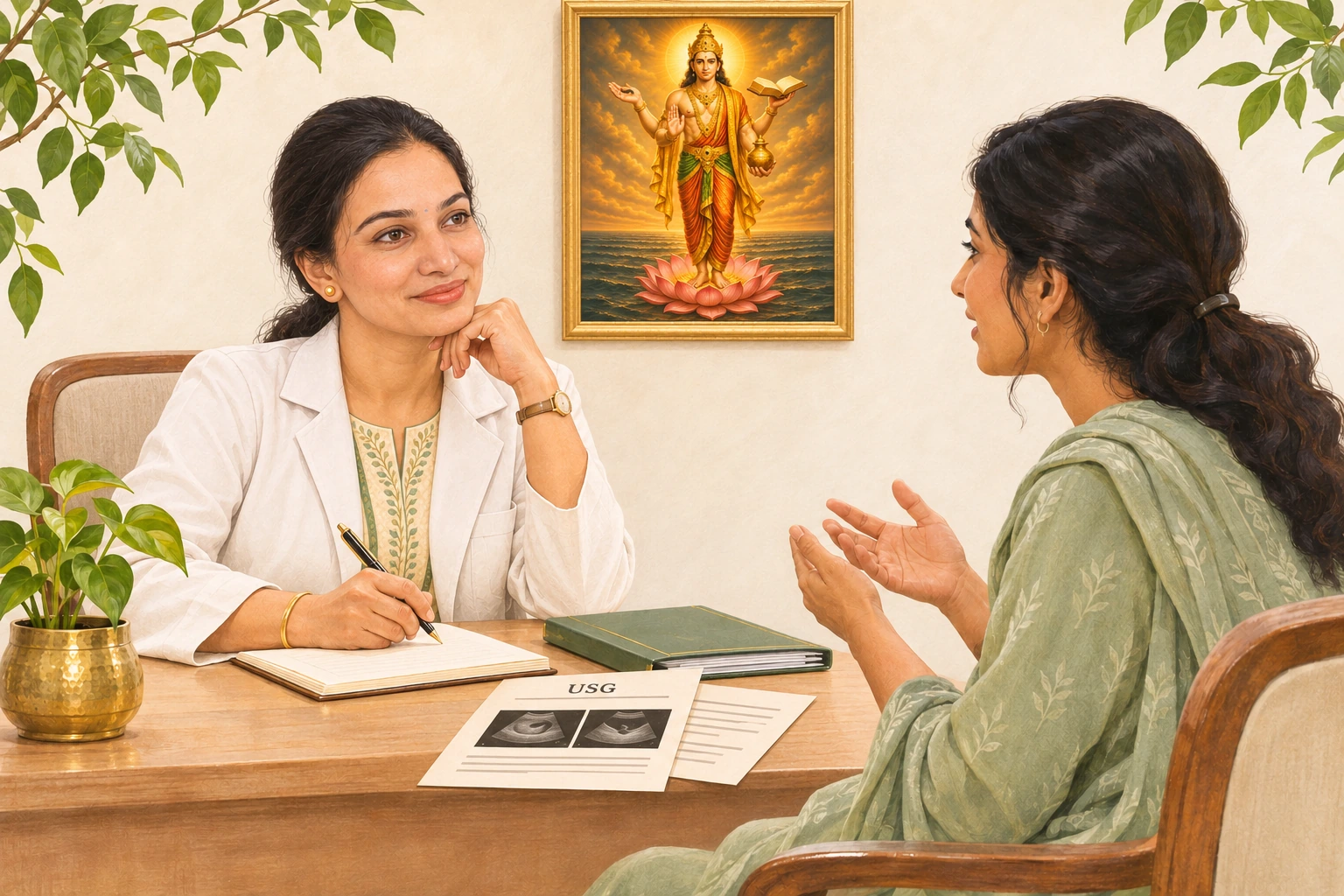
An Ayurvedic consultation is a medical appointment in which an Ayurveda physician discusses your concerns, reviews your health history and assesses you using Ayurvedic principles alongside relevant clinical examination and medical reports. The aim is to understand your situation and agree on an appropriate care plan.
If you have wondered why your doctor asks about meal timings, digestion or sleep when you came in for a different concern, those questions have a purpose. They help build the picture on which the consultation is based.
What happens during an Ayurvedic consultation?
1. Your story comes first
The conversation usually begins with your main concern: when it started, how it has changed, what makes it better or worse, and how it affects daily life. Previous illnesses, operations, allergies, family history and treatments already tried may also be relevant.
Bring your prescriptions and reports. Information about medicines, supplements and home remedies helps the physician consider interactions and avoid conflicting advice. Mention pregnancy or breastfeeding where relevant.
2. Daily habits become part of the assessment
An Ayurvedic history may explore appetite, meal patterns, digestion, bowel habits, sleep, activity, stress and work routine. These are discussed in relation to your health concern.
For example, someone who works night shifts may need advice that fits a different schedule from someone with regular daytime hours. A useful plan should be practical enough to follow.
3. The physician considers Ayurvedic assessment concepts
Ayurveda uses a traditional framework that includes prakriti, or constitution, and vikriti, the current pattern of disturbance assessed within that framework. It also considers agni, the Ayurvedic concept of digestive and transformative function.
These concepts help explain why an Ayurvedic physician may ask about longstanding tendencies as well as recent changes. Prakriti assessment traditionally informs individualised advice about diet, lifestyle and treatment.
These traditional concepts do not replace a confirmed medical diagnosis, laboratory tests or imaging when these are needed.
Examination may include observation, touch and pulse assessment, together with other relevant clinical checks. The components depend on the concern and whether the appointment is in person or online. Ayurvedic physicians may also use modern diagnostic tools when appropriate.
4. Assessment leads to a shared plan
The discussion may cover food choices, daily routine, treatment options and follow-up. Medicines or procedures, if considered, should have a clear reason; every patient does not need the same treatment.
You should understand what is being recommended, how to follow it, what uncertainties or risks matter, and when progress will be reviewed. Further tests or referral may be appropriate before deciding on treatment.
How is it different from another medical OPD?
OPD means outpatient department—care provided without an overnight hospital admission. An Ayurvedic consultation is also a form of outpatient care.
Its distinctive feature is the Ayurvedic framework used to interpret the history and guide advice, including constitution, current patterns and diet and routine. A conventional medical consultation generally interprets findings through biomedical diagnosis and evidence-based management. The methods and evidence supporting particular treatments differ.
However, listening carefully, examining the patient, reviewing reports, discussing lifestyle and personalising decisions are features of good care across medical systems. It would be misleading to say that other doctors “only treat symptoms” or that Ayurveda alone looks at the whole person. Understanding a patient’s circumstances and involving them in decisions are also established principles of conventional medical care.
The most useful question is whether the consultation provides a careful assessment, an understandable plan and appropriate follow-up for your needs.
Why can an Ayurvedic consultation take longer?
There is no single fixed duration for every Ayurvedic appointment. A first consultation may take longer than a brief repeat visit because several tasks need attention:
- Understanding the timeline: a long-standing concern may involve several symptoms, previous treatments and reports.
- Exploring individual patterns: food, sleep, digestion and routine need conversation.
- Examining and reviewing: the physician needs to relate the history to relevant findings and decide whether further assessment is required.
- Explaining the plan: advice must fit your circumstances, and you need time to ask questions.
Consultation length also depends on the complexity of the problem, the clinician and the setting. A longer appointment does not automatically mean better care. What matters is how the time is used.
Ask the clinic about the expected appointment length when booking, particularly for a first visit. A follow-up may be more focused on progress, changes, side effects and any adjustment to the plan.
How to prepare for your appointment
- Write down your main concern and a short timeline of symptoms.
- Bring relevant reports, previous prescriptions and a list of all medicines and supplements, including doses where possible.
- Note allergies and any reactions to previous treatments.
- Think about your usual meals, sleep, work schedule and activity; a brief record can help if patterns are difficult to recall.
- List your most important questions and what you hope to achieve.
For an online consultation, keep reports ready to share and choose a private, quiet place. Some concerns need an in-person examination; an online discussion cannot provide every physical check.
What should you leave with?
A useful consultation should leave you clearer about the assessment, the next steps, how to use any prescribed treatment and when to return. Ask what improvement will be monitored and what symptoms should prompt earlier medical attention.
Ayurvedic products can have side effects or interact with medicines. Do not stop prescribed treatment or delay necessary medical care without discussing it with the relevant clinician. Evidence varies by treatment and condition, so realistic expectations are part of good care.
Plan your consultation at Ayurveda Healing Tree
Explore an in-clinic appointment in Panchkula or an online consultation. Bring your questions and available reports so the conversation can focus on your needs.
Request an appointment. Appointment requests remain pending until confirmed by the clinic.
This article provides general patient education and does not replace an individual medical assessment.