Understand your report. Build healthier habits. Choose care safely.
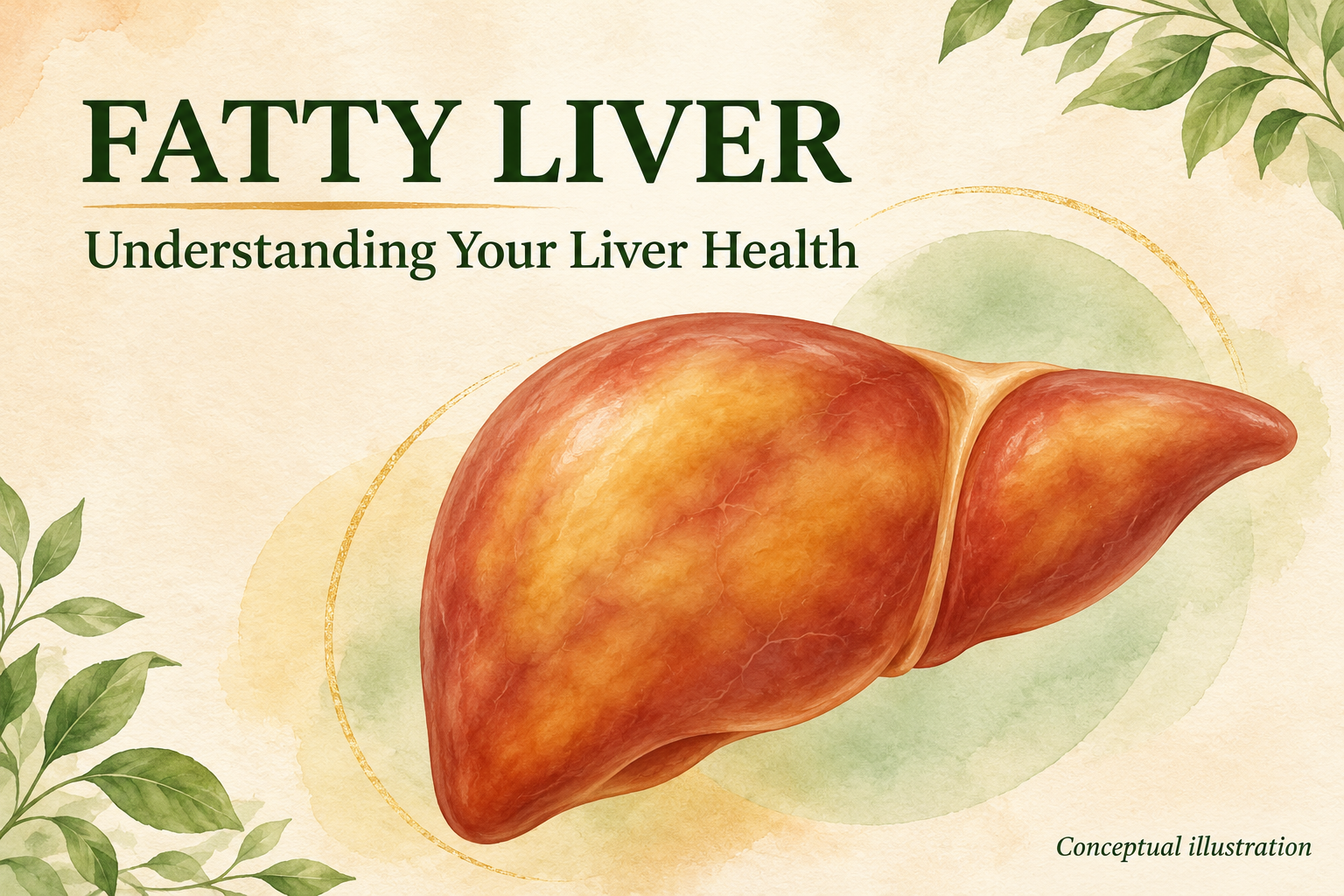
“Fatty liver” on an ultrasound report can feel alarming—especially when you feel perfectly well. It is a reason to assess your health and take steady action. Many people can reduce liver fat through sustained lifestyle changes. The right plan also checks for inflammation, scarring and related metabolic conditions.
Ayurvedic care can provide a framework for personalised food choices and daily routines alongside appropriate medical assessment. Treatment should be guided by your findings, with progress measured objectively.7
What does fatty liver actually mean?
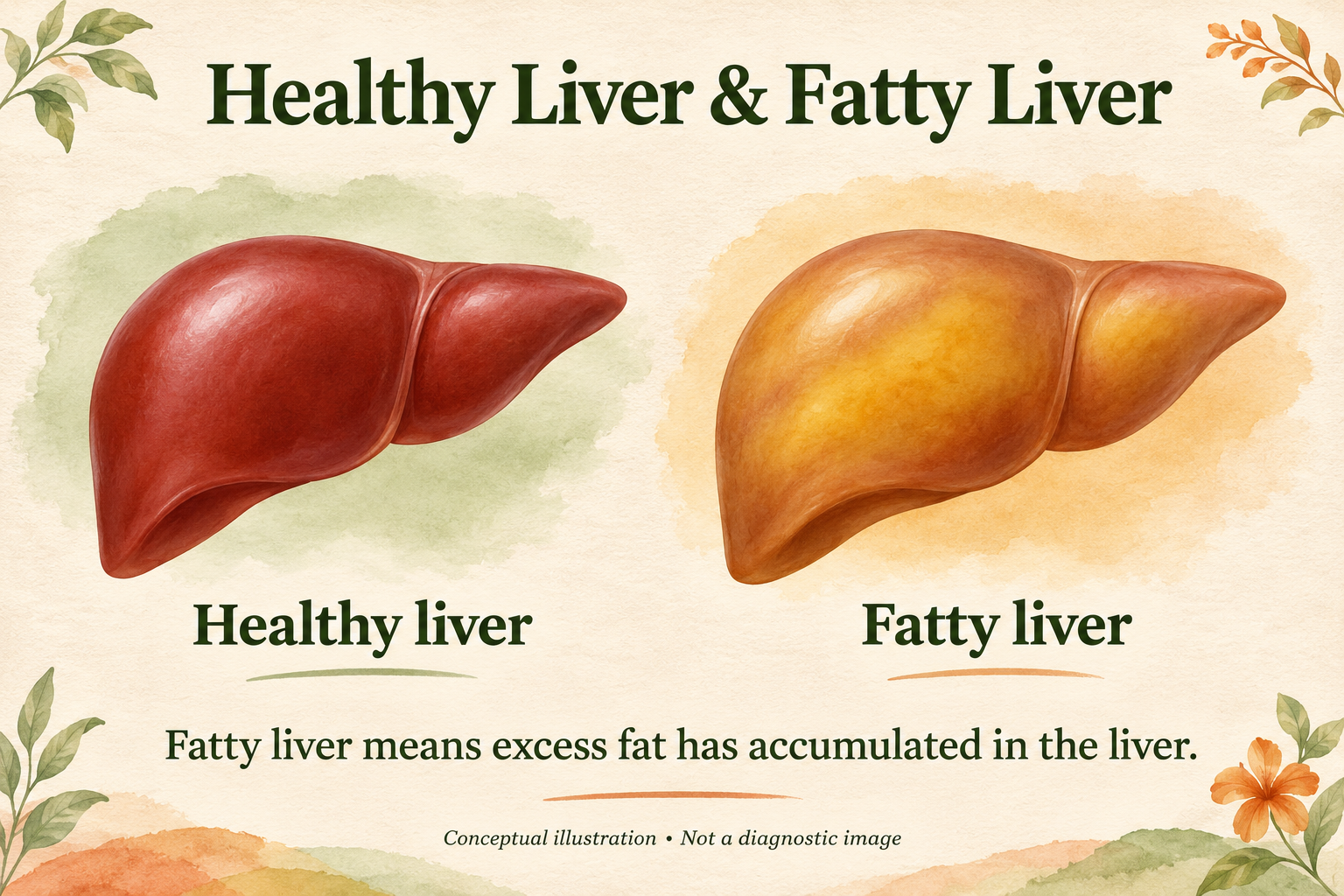
Fatty liver means excess fat has accumulated within liver cells. When it occurs with metabolic risk factors, such as type 2 diabetes or excess abdominal fat, clinicians may call it metabolic dysfunction-associated steatotic liver disease (MASLD). Older reports commonly use NAFLD. Alcohol and other conditions can also cause fatty liver, so the cause needs assessment.
Some people develop inflammation and liver-cell injury, called MASH, which can lead to fibrosis—scar tissue—and sometimes cirrhosis. Many people have few or no symptoms; feeling well does not establish how healthy the liver is.1, 3
Your ultrasound grade is only part of the picture
Grade 1, 2 or 3 fatty liver is not the same as fibrosis stage F1, F2 or F3. Ultrasound describes the appearance of fat; it does not reliably measure inflammation or exclude significant scarring. Normal liver enzymes alone do not rule out advanced disease.2, 13
Start with a complete assessment
Bring your ultrasound report, recent blood tests and a list of all medicines and supplements. Your clinician may review liver enzymes, platelet count, glucose or HbA1c, cholesterol, blood pressure, weight, waist measurement and alcohol intake. Other causes of liver disease may need testing.
A clinician-interpreted score such as FIB-4 can help assess fibrosis risk. Depending on the result and your circumstances, elastography, such as FibroScan, or specialist review may be appropriate. These tests answer different questions; repeating an ultrasound alone is not a complete follow-up plan.2
The Ayurvedic perspective: Agni, nourishment and daily habits
Ayurveda places considerable importance on Agni, the traditional principle governing digestion and transformation of food. Assessment considers appetite, digestion, bowel patterns, food quantity and daily routine. Concepts such as Kapha and Meda may inform an Ayurvedic interpretation, but they are not interchangeable with liver-fat measurements, insulin resistance or fibrosis.4, 5
आयुर्वर्णो बलं स्वास्थ्यमुत्साहोपचयौ प्रभा।
Charaka Samhita · Chikitsa Sthana 15/3
ओजस्तेजोऽग्नयः प्राणाश्चोक्ता देहाग्निहेतुकाः॥
Meaning: The verse presents bodily Agni as fundamental to life, strength, health, nourishment and vitality. It expresses a classical Ayurvedic principle; it is not a clinical claim that a particular medicine cures fatty liver.4
Applied thoughtfully, this approach encourages attention to how you eat and live, with a plan that fits your work, food preferences and health needs.
A practical management plan
Build meals you can sustain
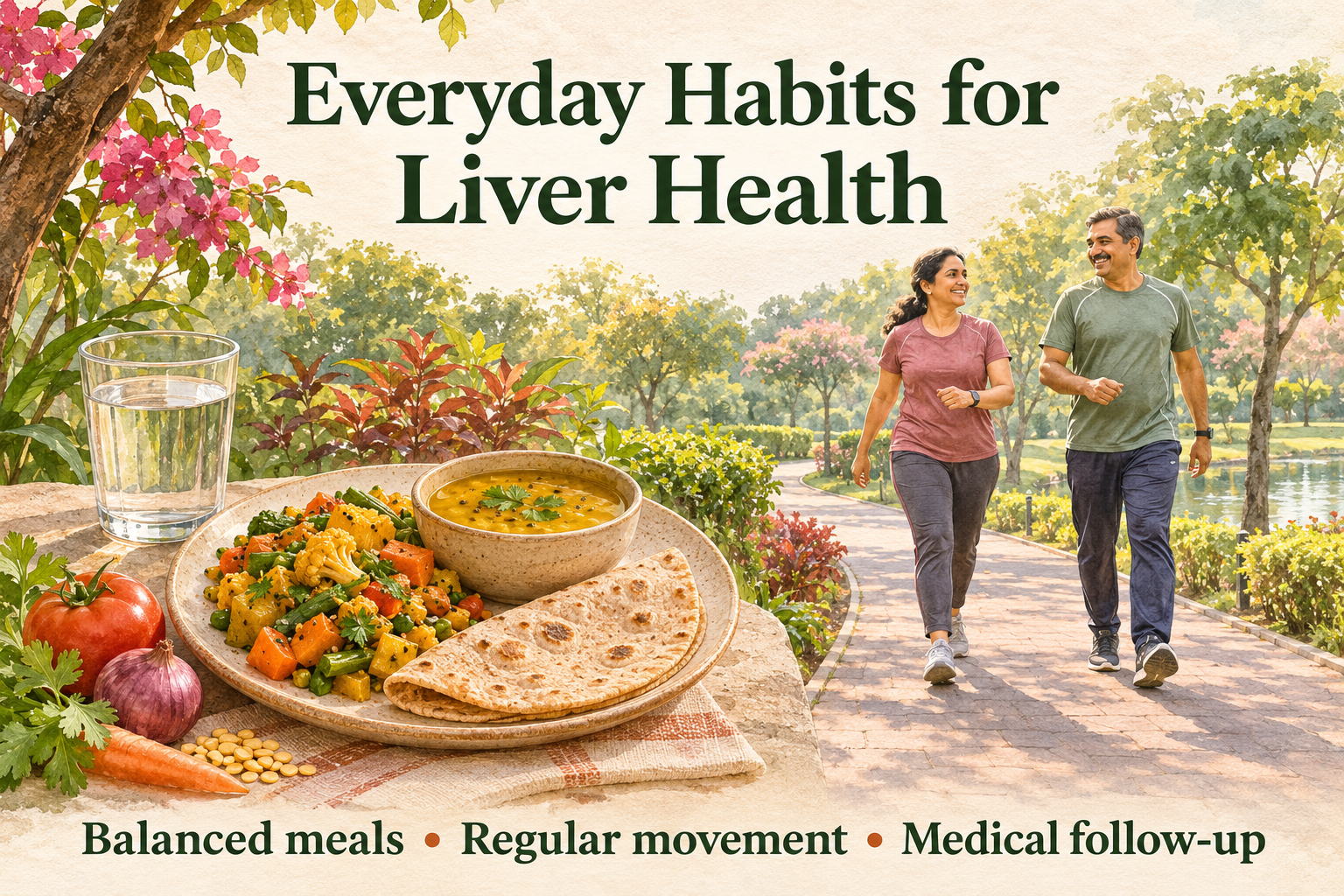
Choose vegetables, pulses and beans, suitable protein foods, whole grains and whole fruit. Reduce sugary drinks, sweetened tea, packaged juices, sweets and frequent ultra-processed snacks. Use fats in measured amounts and favour unsaturated fats over excess saturated fat.6
An Indian-style meal might combine sabzi, dal or another protein source, and a measured portion of roti or rice. Portion sizes need adjustment to your requirements. Honey, jaggery and “natural” sweeteners still contribute sugars; they are not liver treatments. Neither rice nor roti needs a blanket ban.6
Set an appropriate weight goal
For people with excess weight, sustained loss of at least 5% can reduce liver fat; 7–10% may improve inflammation, and 10% or more may improve fibrosis. These are treatment goals, not guarantees. Someone already at a healthy weight needs an individual plan rather than automatic weight loss.1
Lose weight gradually. Crash diets, prolonged fasting and inadequate nutrition can be harmful.7
Make movement a regular appointment
Build towards at least 150 minutes of moderate activity each week, adjusted to your fitness and medical needs. Brisk walking is a practical option. Exercise can help reduce liver fat even when the scale changes little. Start with manageable sessions and increase gradually.1, 7
Address alcohol and metabolic health
Discuss alcohol intake honestly; avoiding it is the safest practical choice during assessment. Alcohol can add to liver injury, particularly when scarring is already present. Diabetes, blood pressure and cholesterol also need coordinated care. Continue prescribed treatment unless your clinician changes it.13
Make the routine realistic
Choose regular meal and sleep times that you can maintain. Plan food ahead for busy days and reduce long stretches of sitting. Gentle yoga or relaxation can be part of a manageable routine; neither should be presented as a proven method for reversing liver scarring.
What about Ayurvedic medicines and Panchakarma?
A fatty-liver report is not a sufficient basis for choosing a universal herbal combination. If Ayurvedic medicines are considered, a qualified practitioner should review the ingredients, product quality, existing prescriptions and monitoring needs. Some herbal preparations can injure the liver, and some products may contain harmful metals. “Natural” does not guarantee safety.7, 8
Research into specific Ayurvedic formulations is developing. One small 2026 trial randomised 67 people and compared a polyherbal formulation with vitamin E over 90 days. Its size, short follow-up and open-label design limit the conclusions. Findings from one formulation cannot establish permanent cure, protection from cirrhosis or effectiveness of all Ayurvedic medicines.9
Panchakarma should not be advertised as a way to “flush fat” from the liver. Avoid self-prescribed purgation, juice-only cleanses or prolonged fasting. Commercial detox claims lack convincing supporting evidence, and cleansing programmes can cause harm.10
It is also inaccurate to say that modern medicine has no treatment. Specialist-directed medicines are available for selected patients with MASH and significant fibrosis in some countries; suitability and local approval must be checked. Lifestyle care remains essential.11
Measure progress beyond “feeling better”
Agree on a follow-up schedule based on your risk and treatment. Review achievable habits, weight or waist changes where relevant, metabolic control, liver blood tests and fibrosis assessment when indicated. Better appetite or energy is welcome, but does not prove that inflammation or scarring has resolved.2
Early liver-fat accumulation can often improve. Advanced disease needs specialist management, and no responsible treatment plan can promise a fixed number of days or permanent reversal for everyone.7
When to seek urgent care
Seek emergency care for vomiting blood, black tarry stools, new confusion or severe drowsiness. New yellowing of the eyes or skin, or increasing abdominal swelling, needs prompt medical assessment. These are not symptoms to manage with home remedies.12
Begin with your reports and a clear plan
Consult Dr. Pratibha Sharma (MD Ayurveda) or Dr. Pankaj Sharma (BAMS, C.R.A.V.) to discuss an individual Ayurvedic care plan alongside appropriate investigations and medical follow-up.
Bring your ultrasound, recent blood tests and current prescriptions.
674, Sector 21, Panchkula
Educational information only. A consultation is needed to determine diagnosis, treatment suitability and referral requirements. The illustrations are conceptual, not diagnostic images or evidence of treatment results.
References and further reading
- EASL–EASD–EASO clinical practice guidelines on MASLD: executive summary (2024).
- NIDDK: Diagnosis of NAFLD and NASH.
- NIDDK: Definition and facts of NAFLD and NASH.
- Charaka Samhita: Grahani Chikitsa, Chikitsa Sthana 15/3.
- CCRAS: Ayurvedic Management of Common Disease Conditions—Treatment Protocols and Costing Guidelines, Vol. 1. General principles, not evidence of efficacy for MASLD.
- NIDDK: Eating, diet and nutrition for NAFLD and NASH.
- NIDDK: Treatment for NAFLD and NASH. Lifestyle and safety information; its older medicine-approval statement is superseded by subsequent FDA approvals.
- NCCIH: Ayurvedic Medicine—In Depth.
- Shivane et al. Randomised open-label study of Ayulite versus vitamin E in NAFLD. Journal of Ayurveda and Integrative Medicine (2026).
- NCCIH: “Detoxes” and “Cleanses”—What You Need To Know.
- FDA: Resmetirom approval (2024); FDA: Semaglutide approval for MASH (2025). These are U.S. regulatory references, not statements of Indian availability.
- NIH: Cirrhosis of the liver—symptoms and emergency information.
- INASL guidance paper on diagnosis and treatment of NAFLD (2023).